Silver price falls in frenetic trading as short squeeze starts to ease
October 16, 2025
Breaking the deadlock in the leadership of the Kimberley Process: A call for urgent action by countries
October 17, 2025Lab-Grown Diamond Market Statistics in 2025
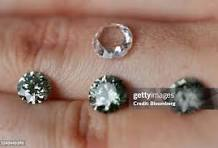
The market for lab-grown diamonds in 2025 is no longer a niche experiment. It has evolved into a global industry with a rapidly growing demand and shifting supply dynamics. This article compiles the key statistics for 2025, explains their implications for buyers and sellers, and highlights how India has become a significant player in this market.
Global market size and growth
Multiple industry reports place the global lab-grown diamond market in the multi-billion-dollar range for 2024 and project continued growth through 2025. Conservative estimates put the global market at about US$25 to 27 billion in 2024, with many analysts forecasting global value above US$28 billion in 2025 and strong expansion into the early 2030s. Longer-term forecasts from market research groups show the market potentially reaching tens of billions by 2032 as manufacturing capacity, retail adoption, and new applications expand.
Those headline numbers reflect two things at once. First, prices per carat for many standard sizes have fallen substantially over the last few years as production technology scaled up. Second, unit volumes have risen quickly as more manufacturers and polishing houses entered the sector and as consumer demand increased in key markets. The combination of falling unit price and rising volume is what produces both the explosive volume statistics and the steady growth in total market value.
Production and trade statistics for India in 2025
India sits at the centre of this market transformation. In fiscal year 2024 to 2025, India more than doubled its export volume of polished lab-grown diamonds. Export volumes rose from roughly 7.81 million carats in fiscal year 2023 to 2024 to about 15.29 million carats in fiscal year 2024 to 2025. This rapid increase in volume shows how quickly production capacity and shipment pipelines expanded in just one year.
On export value, the picture is more nuanced. Estimates and industry reports for fiscal year 2024 to 2025 put the value of India’s lab-grown diamond exports at approximately US$1.4 to 1.53 billion. That figure reflects both higher volume and lower average per carat prices compared with many natural diamond shipments. Careful readers will note that while volume surged, export value grew at a slower rate because of price deflation in many commodity size bands.
Domestic market adoption in India
Domestic consumption in India is growing steadily, though it still trails export volumes. Urban markets and younger buyers are the fastest adopters. Recent market analysis shows that lab-grown diamond jewellery represents about 8 to 10 per cent of urban diamond jewellery sales in India as of 2024 and early 2025. Analysts forecast that domestic market share could rise to 15 to 20 per cent by the end of the decade if current adoption rates continue. This shift is being driven by festival and wedding purchases, digital-first retail models, and strong brand entry into the category.
The festive season of 2025 delivered clear evidence of that change. Retailers reported large shares of orders featuring lab-grown stones, and buyers were choosing larger or more intricate designs because lab-grown stones offered better value. That kind of consumer behaviour during peak buying periods suggests domestic market share will continue to expand.
Price movement and margin dynamics
Price movement is one of the most important statistics to track. Prices for many standard lab-grown diamond sizes have fallen significantly over the past few years. Public reporting and trade commentary in 2025 indicated price declines measured in tens of per cent for commonly purchased sizes. Those lower prices have been essential to mass adoption, but they also put pressure on margins for manufacturers and some retailers.
The margin squeeze is visible in export value and profitability data. Even as volumes doubled in India, export value did not rise proportionately, indicating that average per carat realisations are falling. For manufacturers, this means that efficiency and scale matter more than ever. Those who can control production costs and maintain quality will be best placed to survive and thrive as the market matures.
Certification and quality control statistics
Confidence from buyers comes from verified grading and certification. Major international grading bodies and recognised local labs have adapted their reporting and services to include lab-grown stones. The continued issuance of certificates that detail carat weight, cut, clarity, and colour helps the market because purchasers can compare stone quality in a familiar format. While there is not a single global standard, the growing availability of third-party grading reports is a key enabler of the 2025 market.
Export market share and global supply chain impact
By 2025 lab-grown diamonds accounted for a rising share of global polished diamond exports, and India captured a substantial slice of that trade. Some estimates put lab-grown diamond volume at nearly half of India’s total polished diamond export volume in recent years. The rapid ramp in India altered global supply chains and reshaped the role of traditional mining-based exporters. This shift has consequences not only for jewellery markets but also for countries that rely on natural diamond mining as a major source of export revenue.
Consumer demographics and buying channels
The 2025 market shows clear demographic patterns. Younger buyers are disproportionately represented among lab-grown diamond purchasers. They are more comfortable shopping online and they report that social and environmental considerations matter to their purchase decisions. Online direct-to-consumer brands and established retailers with strong digital operations captured much of the growth because they could show high-resolution images, certificates, customer reviews, and flexible payment options.
This pattern is visible in urban markets where digital penetration is higher. Smaller cities and rural markets still skew toward natural diamonds, but that gap is narrowing as price-sensitive buyers discover that they can get larger stones or more fashionable designs for the same money with lab-grown stones.
Applications beyond jewellery
While jewellery is the dominant application for gem quality stones, lab grown diamonds are attracting interest for industrial and technology uses. Conference reports and industry symposia in 2025 highlighted possible applications in optical components, electronics, and high-performance engineering. These industrial uses could add new demand streams and justify investment in production technologies that improve quality and reduce cost. That makes the long-term market outlook more robust than jewellery demand alone would suggest.
Risks and uncertainty
Every set of statistics needs context. In 2025, the main risks were price deflation and shifting consumer perceptions. Rapid price falls accelerate adoption but compress margins and can lead to periods of consolidation among manufacturers. At the same time, some buyers and collectors value rarity and tradition and continue to prize natural diamonds for status and legacy reasons. That means the market will likely become segmented with clear value tiers rather than converging into a single category.
Trade policy and regulatory clarity are additional sources of uncertainty. Clear labelling and consistent certification rules are essential to prevent consumer confusion and protect resale markets. Countries and trade bodies that provide clear guidance and enforce transparency will help the market develop more healthily.
What the 2025 statistics mean for stakeholders
For manufacturers in India, the message is simple. Scale and efficiency are now critical. The ability to produce high-quality stones at low cost and to supply diverse sizes and colours is a competitive advantage. For polishing houses and jewellery makers in Surat and other hubs, increased demand means opportunity for new employment and for upgrading finishing capabilities.
For retailers, the statistics suggest a clear need to offer lab-grown options, to present certification clearly, and to provide trade-in or exchange programs where appropriate. Education at the point of sale matters. Sellers who can explain quality and value with transparency will convert more buyers.
For buyers, the numbers show that lab-grown diamonds are now a mainstream option that offers larger sizes and more design freedom at a lower cost. That is particularly relevant for ceremonies and special purchases that historically demanded a large natural stone.
Conclusion
The 2025 statistics show a market in transition. Global market value is growing while prices per carat fall. India is both a manufacturing hub and an expanding domestic market. Exports rose dramatically in volume in 2024 to 2025 and export value reached roughly US$ 1.4 to 1.53 billion in the same period. Forecasts from research firms point to sustained growth through 2030 and beyond as retail adoption increases and as new industrial applications appear.
Those numbers mean one thing plainly. Lab-grown diamonds are now a major market force. The statistics for 2025 make clear that this is a structural change in the diamond business rather than a short-lived fad. Policymakers, traders, retailers, and consumers should all expect continued evolution and should prepare for a market that will be larger, more varied, and more competitive in the years ahead.
By Team MyNation