Anyra Diamonds unveils India’s first wide range of daily-wear solitaire & eternity rings
November 24, 2025
VBJ Since 1900 unveils Avatara : A symphony of transformation
November 25, 2025ADPA’s New Definition of Conflict Diamonds vetoed by the Minority
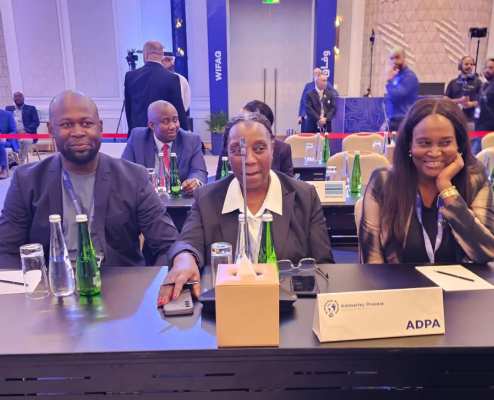
The African Diamond Producers Association (ADPA) presented a consolidated proposal for an expanded definition of conflict diamonds at the Kimberley Process (KP) Intersessional meeting in May 2025. This draft definition formed the basis of discussion during the Plenary from 17-21 November 2025. Six participants- Australia, Canada, the European Union, Switzerland, Ukraine, the United Kingdom and one observer, Civil Society Coalition, refused to support the expanded definition. The vast majority of the AHCRR committee, including most of the major diamond mining countries, supported the proposed expanded definition with some changes.
This proposed definition aimed to provide a Pan-African solution to today’s evolving nature of diamond conflicts and the realities on the ground. ADPA was hopeful that a consensus would be reached on the expanded definition, which included diamond mining communities, at the end of the three-year term of office of the ACHR.
The current definition was approved by the UN General Assembly Resolution No. 55/56 back in 2000, under which conflict diamonds mean “rough diamonds used by rebel movements or their allies to finance conflict aimed at undermining legitimate governments”. The ADPA proposed definition included armed groups, non-state armed groups, UN Security Council-sanctioned individuals and entities and their allies, as well as to cover actions aimed at financing armed conflict and other operations, including attempts at undermining legitimate governments, and the well-being of diamond communities.
The text was carefully drafted to avert an untenable situation of including language that would impact the sovereignty of participants, a competency that the KP does not possess to make such a legal determination. Among the six participants and observers who blocked the consensus is the European Union, which in recent years has purposefully blurred and made several attempts to bypass the work of the KP, in parallel pushing for the regulation of the diamond trade under the control of its own unilateral mechanisms. Close alignment of the Civil Society Coalition with non-producing countries was also noted.
ADPA reaffirms its unwavering commitment to the KP as the only universally recognised certification scheme mandated by the United Nations and the World Trade Organisation to regulate the trade of rough diamonds and underpinned by its three pillars, government, industry, and civil society. ADPA congratulates the Republic of Angola, South Africa and the WDC for leading this work over the last three years. In addition, ADPA congratulates Ghana as the KP Vice Chair 2026 and subsequently KP Chair 2027.
The African Diamond Producers Association (ADPA) is an intragovernmental organization dedicated to promoting sustainable diamond mining, trade, and development across Africa. It comprises 22 member states, 15 Effective members and 7 Observers, including key African diamond-producing nations, and is based in Luanda, Angola. ADPA provides a platform for collaboration and cooperation among its members and works to promote beneficiation and value addition, transparency, and fair market access for African diamonds.