Titan Company share price hit 52-week ͏high͏ of ₹4͏,031
December 30, 2025
Malabar Gold & Diamonds has opened showrooms in USA & Canada
December 31, 2025Amish Shah – Founder & CEO OF ALTR & J’EVAR
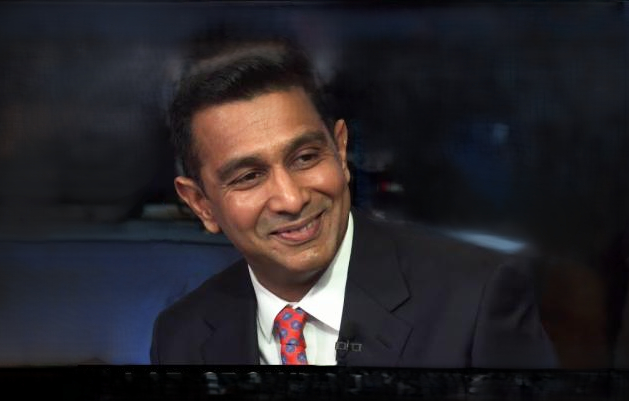
Amish Shah - Founder & CEO OF ALTR & J'EVAR
“Diamonds have always been a component. Lab-grown technology has liberated this component from the historic restrictions of controlled supply, scarcity, and prohibitive cost. This is now bridging the entire industry into a new, more creative conversation.” says Amish Shah- Founder & CEO of ALTR & J’EVAR
A third-generation diamantaire, Amish Shah, Founder/CEO of ALTR Created Diamonds and pioneer of the lab-grown diamond market has never been afraid to challenge the status quo.
After gaining experience, through his family business in the diamond industry and fine jewelry at an early age, Amish joined R & R Grosbard Inc. in New York in 2001 and helped transform it into an international powerhouse.
Ten years later, Amish took over its operations and led a merger with his family business, conceiving R A Riam Group Inc. in New York, which includes ALTR Created Diamonds. As the only vertically-integrated diamond enterprise that provides a true end-to-end product, ALTR creates the purest form of diamonds — type-IIa diamonds — known to man.
Here, in an Exclusive Interview with PRECIOUS WORLD, Amish Shah expresses his opinion on the global diamond market with elan… and proudly introduces his new Jewellery Collection!
Some excerpts…
What changes or growth have you observed in the consumption of lab-grown diamonds (LGDs) in the US market over the last year? Please provide an overview.
Over the last year, the growth of lab-grown diamonds (LGDs) in the U.S. market has shifted from being a trend to defining the new normal.
Consumers have firmly established LGDs as their primary choice for key categories like engagement rings and diamond earrings, with 2025 poised to be the pivotal year for fashion jewelry. This is no longer just a price-based decision. Purchases are driven by an educated mix of lifestyle, social values, personal ethics, and financial pragmatism.
The data now clearly reflects a desire we’ve championed at ALTR for nearly a decade: the aspiration for larger, more beautiful diamonds without compromise. The 2.50 carat center stone has effectively become the new 1 carat.
We’re also seeing a significant elevation in consumer confidence. With a growing segment of the supply chain now offering SCS Global Certified Sustainably Rated Diamonds, and producers like ALTR using 100% solar energy, there’s a stronger sense of responsibility and trust at the point of purchase.
This technology has fundamentally unlocked creativity. Consumers are no longer confined to the traditional design playbook. For example, almost 60% of engagement rings with LGD centers now feature shapes other than round, a dramatic increase from just 15% a few years ago. We’re also seeing a bold move beyond classic white diamonds into a spectrum of colors, including yellow, brown, green, blue, and pink, with growing demand for unique shades and customizations.
Critically, the market is maturing with noticeable growth across distinct consumer segments. We now see emerging tiers from accessible fashion lines to high-end designer jewelry finally offering a choice that aligns with a customer’s own lifestyle and budget, a nuance this industry had long missed. The diamond industry is bridging into its future, finally aligning with the principle that the true “Value is in the Creation and not the Component.”
Fashion jewelry is experiencing the most explosive growth, starting in 2024. While I initially projected that nearly 50% of new fashion jewelry in the U.S. would feature lab-grown diamonds by the end of 2026, adoption has accelerated even faster in 2025. From major retailers to independent jewelers, LGDs are now the primary focus of new collections.
An important, often overlooked outcome is market stabilization. The rise of lab-grown diamonds has allowed mined diamond prices to find a new equilibrium. As noted in a Bloomberg article this summer, mined diamond prices have corrected significantly, down approximately 50% from their peak two years ago. This normalization is healthy for the long-term jewelry ecosystem.
Finally, the seal of arrival comes from high fashion. Legacy houses like Prada, Gucci, Fred (LVMH Brand), Breitling, and Tag Heuer have designed lab-grown diamond jewelry and watches, with many others actively exploring this space, signaling a profound acceptance at the pinnacle of style.
This is the new landscape defined by choice, creativity, and a redefinition of value itself.
How do you see the lab-grown diamond category evolving over the next 10 years, especially as it shifts from a component-based conversation to a design and brand-driven segment?
Over the next decade, the lab-grown diamond category will complete its fundamental evolution, from a component-based commodity to a design and brand-driven segment of the jewelry industry.
Diamonds have always been a component. Lab-grown technology has liberated this component from the historic restrictions of controlled supply, scarcity, and prohibitive cost. This is now bridging the entire industry into a new, more creative conversation.
We will see growth across every economic tier, with consumers aspiring to own beautiful jewelry that uses various metals and unique diamond shapes and colors. Designers are finally free to innovate beyond traditional lines, creating new forms that can be cut in diamond. Metals beyond just gold and platinum will be elevated, and the full spectrum of diamond colors will become essential ingredients for flavor and narrative in design.
Most importantly, this has initiated the long-missing conversation in our industry about identity-driven brand building. The future belongs to brands that focus on design, storytelling, and authentic connection with their consumer. From luxury houses to accessible brands, there is now room for everyone to create jewelry that resonates deeply with their specific segment. Price will no longer be determined primarily by the component, but by the brand, the design, the story, and the marketing.
It’s crucial to note that while engagement rings drove the initial conversation, they represent only a small part of the overall jewelry market. This ratio will shift further apart. Consumers will own more jewelry and feel no need to limit themselves to one or two “forever” pieces. “The future is a portfolio of expressions, enabled by a component that no longer dictates the rules but empowers limitless creativity”.
Where do you see the lab-grown diamond category in the branded luxury segment?
The branded luxury segment has decisively entered the lab-grown diamond category. Legacy houses, as noted, are already designing fine jewelry and watches with it. Simultaneously, new brands like J’EVAR and others are pioneering this space, appealing to a client spectrum from Gen Z to Baby Boomers. Their success proves that luxury is not defined by a component’s origin or price, but by design, brand identity, exclusive experience, and the pride of ownership.
As more heritage brands explore LGDs, these new entrants will carve out their distinct place. They are not just selling a diamond; they are building a modern legacy defined by creativity and conviction.
Do you believe scale is still the biggest competitive advantage in lab-grown diamond growing, or is differentiation now coming from quality control and design?
I believe scale in diamond growing is no longer a true competitive edge. Today, the advantage comes from the creative ability to design a diamond for a piece of jewelry that can tell a story.
Real differentiation starts with understanding the end point before you even grow the stone. The value is now created at the consumer level. It’s driven by the retail experience and marketing, by jewelry design and craftsmanship, by the diamond’s own design and precision cutting all through an ethical and environmentally responsible supply chain.
No single country, grower, or technology will control pricing in today’s free world. To differentiate, growers must become more involved in the supply chain; they can no longer just be component producers. The future belongs to those who see the diamond not as the final product, but as the starting point of a narrative.
Do you see lab-grown diamonds becoming a default choice for certain jewelry categories, rather than an alternative?
Lab-grown diamonds will be the primary choice for the larger consumer space across all categories not limited to any single product type. Let’s be clear: lab-grown diamonds were never merely an alternative. From day one, they have represented a deliberate choice for the consumer.
Your New Collection featuring alphabet designs is a novel idea. While alphabetical designs have been created with metals, they are uncommon with diamonds. Are there any other innovative designs currently in the pipeline?
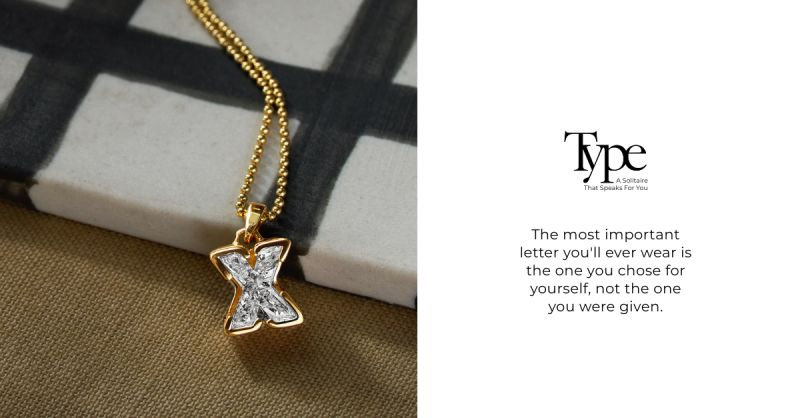
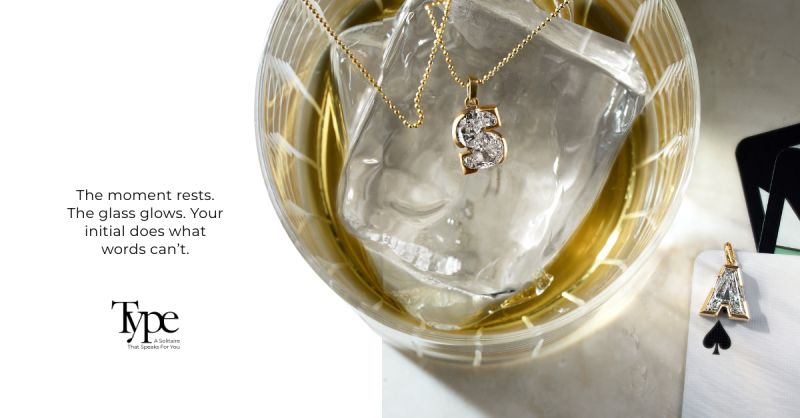
TYPE by J’EVAR is a collection of Single Diamond Letters, each letter crafted by master artisans guided by precision technology. Our design philosophy is rooted in heritage but realized through innovation.
The idea of a diamond initial was considered impossible in the traditional world of diamonds. We embraced this challenge, not only to design each letter with perfect proportions, but also to engineer it for optimal brilliance, refraction, and reflection, then set it in 18K gold as a Jewel meant to last a lifetime. It took 30 months of Teamwork by our Chief Diamond Designer, Ritesh Shah and Chief Operating Officer Neha Shah to breathe life into this vision.
A diamond solitaire has always been desirable and worn 80% of the time as a round brilliant. We asked: why not wear your initial, a solitaire that reflects who you are? Diamond letters are deeply personal. Anyone who wears one has a story to tell.
The name TYPE, inspired by typography, connects to the idea that your handwriting expresses your identity. In the same way, the TYPE Diamond Necklace speaks for you when you are silent. It’s more than jewelry; it’s A Solitaire That Speaks for You.
Who is J’EVAR?
J’EVAR is our Fine Jewelry brand, where our designs are inspired by heritage, powered by innovation, crafted by master artisans, and rooted in responsibility. In simple terms: J’EVAR is Jewelry with a Conscience.
We are focused on creating our place in the luxury fine jewelry segment through design and desirability, fusing design innovation with the respect owed to our 90-year heritage of jewelry making.
From cuts to colors, each diamond is created and polished with precision. From metal to craftsmanship, every jewel is made by artisans who leverage innovation to create fine jewelry that is artistically beautiful and wearable daily.
And because we are rooted in responsibility, we use lab-grown diamonds grown with 100% solar energy and minimize the use of virgin metals.
J’EVAR collections are rooted in symbolism and form, do you see this as a response to how consumers emotionally engage with jewelry today?
Yes, absolutely. Today’s consumer doesn’t just buy a product, they seek experiences and pieces that evoke genuine emotion. They look for jewelry that carries meaning, whether through symbolism or form.
Our collections at J’EVAR are intentionally rooted in symbolism and form precisely to meet this deeper emotional engagement. Through our exclusive diamond cuts and thoughtful designs, we embed meaning into every facet and curve ensuring each piece doesn’t just adorn but also speaks. That connection between the wearer and the story of the jewelry is at the very core of what we create.
Looking ahead, when someone encounters TYPE years from now, what do you hope they understand about J’EVAR’s point of view, not just on diamonds, but on identity and modern luxury itself?
Years from now, when someone encounters TYPE, I hope they see more than a diamond initial. I hope they understand that J’EVAR’s point of view was never just about diamonds, it was about empowerment.
We believed that modern luxury isn’t defined by scarcity or status alone. It’s defined by personal meaning , by pieces that reflect who you are, not just what you can afford. TYPE was our statement that identity can be worn, that heritage can be advanced through innovation, and that responsibility can be woven into beauty.
We saw the diamond not as a static component, but as a medium for self-expression. And we saw luxury not as a price point, but as the integrity of craft, the intention behind the design, and the confidence it gives the wearer.
So, when someone looks at TYPE years from now, I want them to feel that J’EVAR understood something fundamental: the most precious thing you can wear is your own story.
As lab-grown diamonds mature into a true luxury category, what do you hope J’EVAR will ultimately stand for in shaping how future generations define value, identity, and permanence?
As lab-grown diamonds mature into a true luxury category, I hope J’EVAR will be recognized as the brand that redefined the foundations of modern luxury.
Ultimately, I want J’EVAR to stand for a complete and conscious ideal: where Heritage meets Innovation, Design is realized through Craftsmanship, and beauty is built on Responsibility.
From our Lotus Petals collection, inspired by the layered symbolism of purity and resilience, to our TYPE collection, which transforms a diamond into a personal signature, every piece begins with a story meant to be lived in. The true design is not finished by us; it is completed by the individual who wears it.
For future generations, I hope J’EVAR demonstrates that value is defined by creative integrity and ethical intention. That identity is something to be claimed and worn with pride. And that permanence is not a matter of age, but of personal significance, a piece so resonant with who you are that it becomes inseparable from your own journey.
In essence, J’EVAR stands for a new definition of luxury: where profound intention meets personal meaning, creating pieces that become landmarks in your life’s story.