National Union of Mineworkers hits back at De Beers amid retrenchment fears
July 16, 2026
Malabar Gold & Diamonds becomes the first exporter of jewellery under the India-UK FTA
July 17, 2026Beyond Gold: How Lab-Grown Diamonds and Alternative Metals Are Reshaping the Jewelry Industry

Kat Morrow, Private Gemologist
by Kat Morrow
The jewelry industry is experiencing one of its most exciting transformations in decades.
Not long ago, consumers had limited choices when it came to fine jewelry: natural mined diamonds set in gold or platinum were the standard. Today, advances in technology, changing consumer preferences, and rising precious metal prices are creating a whole new world of possibilities.
From lab-grown diamonds to innovative metals like titanium and cobalt, jewelry designers are pushing the boundaries of creativity while making luxury more accessible than ever before.
The result? If you can imagine it, chances are someone can create it.
The Lab-Grown Diamond Revolution
Lab-grown diamonds have moved far beyond being a niche alternative.
In fact, many consumers are surprised to learn that lab-grown diamonds are grown from the seed of natural mined diamonds. They possess the same chemical, physical, and optical properties as natural mined diamonds. The difference lies in their origin.
Natural mined diamonds formed deep within the earth over billions of years. Lab-grown diamonds are created in a short 2-3 months in highly controlled environments which replicate those natural conditions.
To the naked eye—and even to most jewelers without specialized equipment—the two are indistinguishable.
What has truly changed the market is affordability.
Consumers can purchase a significantly larger or higher-quality lab-grown diamond for the same budget they would spend on a smaller natural mined diamond. This has opened doors for creative jewelry designs which were once financially out of reach.
Bigger, Bolder, More Creative
One of the most exciting developments is the freedom designers now have.
Because lab-grown diamonds are more affordable, we’re seeing:
1. Larger center stones
2. Dramatic tennis necklaces
3. Statement earrings
4. Bold cocktail rings
5. Multi-stone designs
6. Custom creations featuring dozens of diamonds
Pieces which once existed only in luxury showcases are becoming attainable for a broader range of jewelry lovers.
Consumers are no longer asking, “Can I afford this design?”
They’re asking, “What design do I want?”
That’s a significant shift.
The Rising Cost of Precious Metals
While lab-grown diamonds have become more affordable, precious metals have been moving in the opposite direction.
Gold prices have climbed dramatically over the past several years, making traditional gold jewelry increasingly expensive to manufacture.
Silver, platinum, and other precious metals have also experienced significant price fluctuations.
As a result, jewelry designers and manufacturers have begun exploring alternative materials which offer beauty, durability, and affordability.
Enter the Alternative Metals
Today’s jewelry market includes an exciting range of non-traditional metals which combine modern aesthetics with exceptional performance.
Titanium
Titanium has become a favorite among designers for several reasons:
1. Extremely lightweight
2. Highly durable
3. Corrosion resistant
4. Modern, sleek appearance
5. Comfortable for everyday wear
Titanium’s strength allows designers to create bold pieces without the weight associated with traditional metals.
Cobalt
Cobalt is another rising star in contemporary jewelry.
Known for its bright white appearance and impressive durability, cobalt offers many advantages:
1. Scratch resistance
2. Long-lasting shine
3. Hypoallergenic properties
4. Excellent structural strength
Its naturally white color makes it particularly attractive for showcasing diamonds and gemstones.
Stainless Steel and Other Modern Metals
Designers are also incorporating stainless steel, tungsten, ceramic, and mixed-metal combinations into their collections.
These materials allow for innovative textures, shapes, and finishes that weren’t commonly seen in traditional fine jewelry.
Mixing Luxury with Innovation
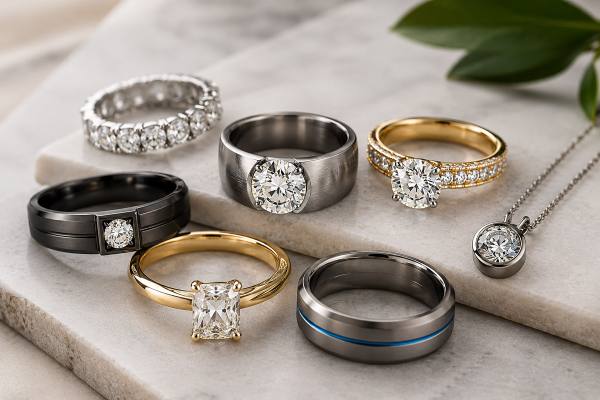
One of the biggest trends emerging today is the combination of lab-grown diamonds with alternative metals.
Imagine:
1. A five-carat lab-grown diamond set in titanium.
2. Diamond eternity bands crafted in cobalt.
3. Modern geometric designs combine gold accents with alternative metals.
4. Custom engagement rings which blend traditional elegance with contemporary engineering.
These combinations allow consumers to maximize their budgets while creating highly personalized pieces.
Sustainability and Practicality
Many consumers are also drawn to the practical benefits of these innovations.
Alternative metals often require less maintenance than traditional precious metals. Lab-grown diamonds provide an option for those who prioritize technology-driven sourcing.
For many buyers, the appeal is simple: exceptional beauty, greater flexibility, and more value for their investment.
What Does This Mean for the Future?
The future of jewelry is becoming increasingly personalized.
Instead of being limited by traditional materials or budget constraints, consumers now have more choices than ever before. Designers can create larger, bolder, and more imaginative pieces while offering options across a wider range of price points.
Natural diamonds, gold, platinum, and other precious materials will always hold an important place in the jewelry world. Their rarity and history remain deeply valued.
But alongside these classics, a new generation of materials and technologies is expanding what’s possible.
The jewelry industry isn’t replacing tradition—it’s adding to it.
And for jewelry lovers, that’s an exciting development.
Whether you’re drawn to the timeless romance of natural mined diamonds or intrigued by the innovation of lab-grown stones and alternative metals, today’s market offers something truly remarkable: the freedom to create jewelry that’s uniquely yours.
Book a chat! I would love to help you find the perfect lab-grown diamond ring, bracelet, necklace, or earrings. The styles and possibilities are endless!