Mini Diamonds returns to profit in Q1 FY27; Revenue jumps 30% QoQ to ₹196 crore
August 4, 2026
Lab-grown diamonds are a sustainable alternative to mined stones
August 5, 2026Ahmed bin Sulayem’s Blog
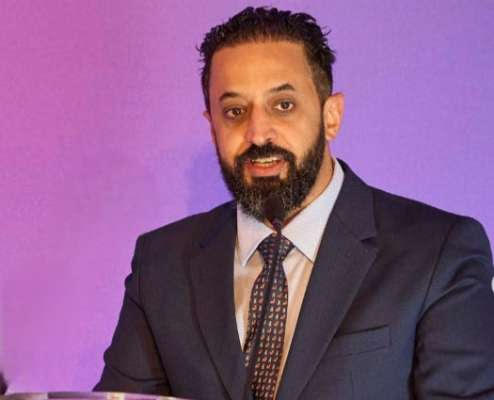
Ahmed Bin Suleyam, Executive Chairman & CEO-DMCC
What the Congress Got Right. What the Election Got Wrong.
‘I went to Singapore arguing the WFDB stood at a fork in the road. It chose continuity. The rest of the trade, sitting in the same room, chose something else entirely.’ – David Troostwyk
Ahmed bin Sulayem
I arrived in Singapore believing that the 41st World Diamond Congress would be the moment the World Federation of Diamond Bourses decided what it wanted to be. I said so publicly before I travelled. In “A Watershed Moment for the World Diamond Congress” I argued that the Federation stood at a fork in the road, one path leading to continuity and a slow slide into irrelevance, the other to transformation. The presidents descending on Singapore were the people who would choose. I stood for Vice President alongside Ahmed Bin Sulayem and Molefi Letsiki, because I believed that together we had what it would take to modernise and reform the organisation for today’s environment.
I still believe it was the right argument. I was simply wrong about which road would be taken.
Let me start by saying that I was wholeheartedly impressed by the Congress itself; it was one of the best industry gatherings I can remember. The election, in contrast, felt as though it was a failure of resolve. Ultimately, the decision was made to stick to the status quo, and although it seems very little changed, what actually happened to get there is worth unpacking.
Before the Ballot
I thought that publishing my earlier article may cause a reaction, and indeed it did. They were manifold and numerous. The Federation itself reportedly received some complaints, with objections that ran roughly as follows: elections are not played out in public, the opinions of people who do not hold a vote are of no consequence, and the only legitimate interest belongs to presidents and vice presidents. Others took the opposite view, arguing that the piece generated a refreshing, genuine interest in the organisation and its proceedings. Some called it spamming, propaganda, and objected to an election discussion happening in WhatsApp groups with a large audience. This was so contentious that many proposed shifting the discussion into a newly formed, much smaller group, in the final days.
It personally felt as close to censorship as I have experienced in this industry. An eighty-year-old institution that represents a global trade should be able to withstand one of its own members writing about its future. If the argument was wrong, surely, it’s in everyone’s interests to have it corrected in the open? I was happy to give my opinion then and I am happy to give my opinion again now.
The days before the vote also brought a concerted push against Ahmed. Two arguments held court. The first was that Dubai already holds too much influence over the global diamond industry, and that electing a man who is not a diamond dealer in the traditional sense, whatever his record, would mean losing control of the organisation (never mind that he chairs the DDE, and acted as KP chair on two separate occasions and caretaker chair when no one else stood up). The second was that Dubai is too pro synthetic. Ahmed answered both arguments forcefully and publicly. His interest in synthetics, he said, is neutral and if anything, technological rather than jewellery-focused. In any case, China and India are the world’s largest producers and polishers of synthetic stones and the USA is the biggest consumer, simply factual. Some feel his robustness did not help him. That may be right, but it is also worth asking what it says about us when a candidate is punished for answering an attack directly.
Instead of being motivated with what lies ahead it was where we had come from which seemed to still play on people’s minds, and this was the real crux that decided where the votes were going. It wasn’t so long ago that 90% of the worlds rough travelled through Antwerp in some form. When I lived there pre-2011, it was still a destination for buyers from around the world. Buyers from the far east would open buying offices, and traders from all round the world would descend on the Diamond Capital. Today much of that lustre has gone, Dubai superseded Antwerp, in part because it was more ambitious and Antwerp was too complacent. Still fresh in the mind to many, Dubai is read as a threat, but in my view, however unfortunate it may be, that ship has sailed. Dubai has already overtaken Antwerp as the world’s rough trading hub, and the sensible response now is to work with Dubai to find new opportunities for Antwerp, rather than spend energy trying to stifle its advance. It was mooted that Belgium would support Lin Qiang, given the good relationship between Belgium and China, and the obvious Belgian interest in a strong Chinese market. The politics of the vote went as thus; In order not to split the vote, Belgium appeared to have moved behind Mehul Shah, to be certain Dubai did not gain a foothold. India’s calculation was similar, they did not want to cede power, or the perception of power, even though they are a much stronger industry nation (even with their healthy trading relationship with Dubai, and the fact that Indian companies use Dubai’s hub to their own advantage wherever it suits them). So, this was never really a contest of ideas or visions for the organisation itself. It was a contest of strength and ego for specific industry regions.
The Election in Detail
It was an eventful and, at moments, faintly absurd afternoon.
Despite being in 2026, the secret ballot was conducted with paper and envelopes. Technology exists that would have made the procedure cleaner, faster and far less prone to error, yet an enormous amount of organisational effort went into printing ballot papers instead. Each bourse was called in turn, and each voter stood and stated their name, their bourse and their position within it. Dignified in its way, it was a scene that would have looked familiar in 1976.
Congress elections carry a specific rule: no proxies, and only presidents and vice presidents may vote. The rule exists to ensure that presidents and vice presidents actually turn up. It became apparent during the roll call that board members from several bourses had been elevated to vice president in the days before the congress for the sole purpose of qualifying them to vote. That makes a mockery of the rule and of everyone who obeyed it.
The ballot was called for the President. Then, with the envelopes about to be opened, someone pointed out that the candidates had prepared speeches and that the room wanted to hear them. The entire first vote was voided. An election for the leadership of the global diamond trade was held, and then unheld, because we had forgotten to let the candidates speak.
The speeches, when they came, were worth hearing. Ahmed spoke about running the DMCC, about the broader view that comes from leading a trading centre rather than a single business, about bringing all bourses together, representing all members, modernising the Federation and creating new entry points and new opportunity. Lin Qiang spoke about long experience and about working with every stakeholder for the good of the natural diamond business. Mehul Shah spoke about deep-rooted experience, stable leadership, and guiding the world’s bourses through changing consumer preferences, new technologies and evolving international trade conditions.
The vote was retaken. Mehul Shah was elected President, the first Indian ever to hold the office, which is a genuine milestone for the largest workforce in our industry. Ahmed and Lin were both invited to stand for Vice President and both declined. Molefi Letsiki withdrew from the Vice-Presidential race in order to stand unopposed for Treasurer General, which he duly won. Philippe Barsamian was returned as Vice President and Luigi Cosma elected Vice President for the first time. Rony Unterman was returned as Secretary General. I stood for Vice President and was not elected.
The most refreshing outcome of the day, by a distance, was Molefi Letsiki as Treasurer General, and I support him unequivocally. He is a practitioner who has built his career inside benefaction, youth development and ethical trade rather than observing it from the outside, and he arrives in that office from the producing world, which no Treasurer General has done before. If this executive has an asset, it does not yet fully appreciate: it is him.
There was nervousness in the building beforehand, a great deal of lobbying, and a widespread sense that the result was settled before a single envelope was sealed. India represents the largest body of workers in this trade and had the most to win and the most to lose, and the leadership meant considerably more to that community than to most others in the room. I understand that entirely. Whether it served the organisation is a different question, and I suspect that for many voters it was never really asked.
The Federation had a real opportunity to elect a leadership built for the business environment that exists in 2026 rather than the one that existed in 1996, and it chose not to. What we got was the status quo, nothing refreshing, and a three-year wait before the membership gets another say, most probably six before this office genuinely changes character, since a president may serve two terms. The new administration inherits an uphill battle to be more impactful than the one that has just left.
Credit where it is due, and it is due. The outgoing executive did a decent job in genuinely difficult years. They took the Federation from almost nothing in the bank to close to a million dollars, franchised out Get Diamonds. They grew the membership, including bringing producing countries inside the tent. That is a real record, and it deserves to be said out loud.
Which is exactly why the conduct of the election stings. Botswana and Angola joined this Federation with real excitement about what it could become. I cannot imagine either delegation was impressed by what they watched on Monday afternoon. They came for a modern institution and were shown envelopes, hastily minted vice presidents and a vote that had to be run twice.
And then the congress began
Away from the ballot box, as I said, this was as good a congress as I have been to. Superbly organised, warm, busy, and unified in a way that our trade has not always managed. The panels were substantive rather than promotional. If you had walked in on Tuesday morning knowing nothing of Monday afternoon, you would have concluded that this industry knows precisely what it needs to do.
There was organisational business too. The Qatar Diamond Exchange was admitted as a new member. The Israel Diamond Exchange and the New Israel Club for Commerce rejoined, though not before a lengthy discussion of the conduct of the Israeli bourse’s president, who in 2025 wrote to the WFDB setting out terms for Israel’s continued membership, including his own appointment as WFDB Vice President, along with other unacceptable demands, all without the knowledge or approval of his own board. The congress agreed that rules would be put in place so that it can never happen again.
The African leadership session was the moment the week found its subject. Minister Bogolo Joy Kenewendo of Botswana made the case for capturing more value across the pipeline: offering many different aspects they plan on having a hand in, other than the local cutting and polishing we have come to expect. These included traceability and provenance, together with consumer storytelling of ethical Botswana Diamonds and a stronger contribution to global marketing, positioning Botswana as a trading and innovation hub in their own right, and not just simply a producer. Her line that diamonds should leave Botswana not only as rough stones but as brands, craftsmanship, technology and jobs, seemed to set the tone for every conversation that followed. Secretary of State Dr. Victor of Angola set out his own vision built on local manufacturing, and infrastructure benefitting local communities directly. Botswana’s speech came across as the stronger policy speech, detailed and backed by initiatives already running, but Angola’s was a strong statement of intent from a country whose ambition is real and growing fast.
Rob Bates had a busy few days in Singapore chairing many of the panel discussions that took
place, though they were engaging, high calibre speakers at every session. I highlight a handful here, but if you get the opportunity to watch them all online, I highly recommend doing so. On the Asia market, speakers explained why it shouldn’t be viewed as just one monolithic market. Lin Qiang of the Shanghai Diamond Exchange was measured about China, highlighting slower luxury spending, and rebuilding of confidence. Kent Wong of Chow Tai Fook carried particular weight as he speaks from direct consumer contact at one of the largest retailers on earth: describing evolving preferences, younger luxury buyers, omni-channel retail, brand trust and storytelling. Anoop Mehta of the Bharat Diamond Bourse interestingly argued that India is now a significant consumer market, and not just the world’s cutting and polishing capital.
The panel of the week for me was the Building Natural Diamond Demand Worldwide session, which saw Olivia Landau of The Clear Cut and Amber Pepper, the new CEO of the Natural Diamond Council in discussion. Olivia brought the digital-first retail view and a real command of how millennial and Gen Z buyers research long before they buy. As usual, it’s so refreshing to hear her clear understanding of who the customer is and what the customer wants. Amber Pepper made the most impactful argument of the entire congress, and I expect it to shape the discussion and drive action in the months ahead.
She argued that the NDC should not be attacking synthetic diamonds, should not be trying to compete on price, and should not use fear as a marketing strategy. Nor should we assume consumers already understand the difference between natural and synthetic. She told a story of her recent experience mystery shopping in a jewellery store where staff presented a stone as natural and then, pressed on the price, suggested it actually might be synthetic. This should really be pinned to the wall of every trade association in this business! Her reframing was the sentence that stuck with me the most, ‘stop asking why consumers should not buy synthetic, and start asking why consumers should fall in love with natural.’ Our greatest advantage is not fear, it is optimism, and of course it should be, the natural diamond story is the best story there is. If told well, it does everything we need it to do and, in my opinion, is the closest thing our industry has to a strategy.
The other highlights were President and CEO of the GIA Pritesh Patel’s talk with Richa Goyal Sikri on expanding education. As well as John Pollard of IGI, Jacques Voorhees of Icecap.ai, and Elizabeth West of De Beers taking on the last eighteen inches between the counter and the customer, and discussing how artificial intelligence can reinforce the natural diamond story at the point of sale, rather than dilute it.
My panel contribution was on a generational panel with Cédric Barsamian of Barsamian Diamonds, Kalpesh Jhaveri of Diamond Club West Coast and Molefi Letsiki Chairman of The Diamond Gem & Jewellery Association of Southern Africa. We talked about how each of us came into this industry, about the Young Diamantaires and the fact that all of us are connected through it, and about what leadership needs to look like next. I set out my five pillars: relationships, trust, integrity, craftsmanship and quality. I explained why I built CiviGem, to connect people, strengthen the industry through community, education and collaboration, and add value in ways that have nothing whatsoever to do with price.
I also chaired my final Trade and Business Committee meeting, where I proposed a WFDB best practice, recommending that member bourses adopt the exclusive use of the term synthetic diamond in trade communications, documentation and member guidance. The case is straightforward. Synthetic diamond is technically accurate, historically established and internationally understood, and it distinguishes a manufactured product from a natural one without ambiguity or reliance on marketing language. The FTC never prohibited the term in its 2018 revision. It simply permitted additional descriptors, and much of the trade then drifted towards laboratory grown on the assumption that synthetic had been discouraged, which it had not. France recognises only diamant synthétique and diamant de synthèse by decree. Customs authorities worldwide already separate natural diamonds under HS heading 7102 from synthetics under heading 7104, and the customs language is synthetic throughout. CIBJO’s Diamond Commission began working in 2025 towards restoring it as the standard descriptor. I argued too that grading laboratories should visibly distinguish their synthetic reports from natural ones, because applying the 4Cs identically implies an equivalence of quality assessment and rarity that does not exist. Laboratory grown has become a marketing expression that softens the perception of a manufactured product. Softening perception is not the job of a trade body; consumer clarity is. The proposal was voted on and will be adopted by the WFDB and its member bourses. We also reviewed the success of our category marketing campaigns, agreed to continue them, and confirmed continued support for the NDC’s category marketing.
Then there were the evenings, which matter more than agendas admit. The Diamonds and Gems Asian Charity Dinner at Flower Field Hall in Gardens by the Bay, and a gala dinner inside the Singapore Oceanarium, eating surrounded by fish, with superb food, excellent company and speeches that mirrored the occasion. Trust in this trade is still built at dinner. Whoever planned the week understood as much.
Where this leaves us
There is a deeper problem attached to the WFDB’s judgement this July and nobody in the room seemed especially anxious to discuss it. The Federation is active in representing this industry internationally. It is far less convincing at supporting the bourses that constitute it. Ask what the WFDB actually delivers to a member bourse, then ask what it delivers to that bourse’s members, the dealers, manufacturers and brokers whose fees ultimately fund all of it, and the answer thins out very quickly. Those members need opportunity, commercial value, education, protection and a reason to renew that amounts to more than tradition. That is the work, and it is the work that keeps an institution relevant. I saw little in Singapore to suggest that either the outgoing or the incoming administration regards it as urgent, and I think that will cost them, because bourses under pressure eventually ask what they are paying for.
If the Federation is not careful, the trade will simply overtake it, it simply won’t be required anymore. The solutions it solved in years gone by are now being solved elsewhere. The task facing this executive is therefore harder than the one facing the last. It is not to just steady the ship., but instead to prove, within three years, that the Federation still matters to the people paying for it.
My congratulations to Mehul Shah are sincere. Becoming the first Indian President of this Federation is a considerable thing, and he arrives with great experience and the confidence of the room. I wish him and the new executive real success, and I hope they grow the organisation, support the bourses and their members properly, serve the trade rather than administer it, and bring through a younger and more motivated management team behind them, because that is the only way any of this holds. If they do that, I will be the first to say I was too pessimistic in June.
The industry knows what lies ahead. It knows the trading environment is difficult, that consumer behaviour has changed permanently. It knows that terminology, provenance and storytelling are now competitive weapons rather than compliance topics, and that nobody is coming to rescue this category on our behalf. What Singapore demonstrated was that the trade has stopped waiting to be led, and instead are leading from the front. Producing countries are building value at home. Retailers are beginning to read their customers properly. Marketers are trading fear for optimism. Technology is giving buyers another reason to engage. A new generation is ready to have their heads turned for the right reasons and we are unifying as an industry as we build to success.
The natural diamond remains the most powerful story our trade has ever told, and in Singapore I watched people from every part of the value chain agree on how to tell it.
The federation might not know what it’s good for, but industry stakeholders clearly do. The future of this trade is a great deal brighter than that Monday afternoon suggested, and it belongs to the people who are already out there building it.