Ahmed bin Sulayem
December 10, 2025
Ariana strikes funding deal to push Zimbabwe gold project forward
December 11, 2025Closing Remarks by KP Chair – Kimberley Process Plenary 202 | Ahmed bin Sulayem
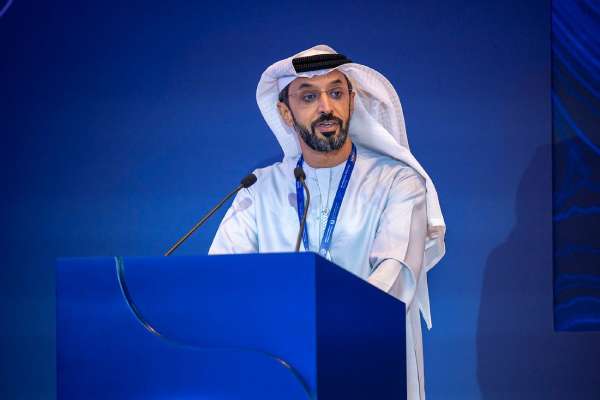
Ahmed Bin Sulayem, Executive Chairman & CEO
Your Excellencies, distinguished delegates, Esteemed colleagues, ladies and gentlemen,
As we conclude this Plenary, I want to thank all Participants and Observers for the commitment and engagement shown throughout the week. It has been a demanding programme, but it has also delivered important progress.
This week marked the first Ministerial Meeting since Interlaken in 2002 – a reminder that the Kimberley Process is not merely a technical arrangement but a political compact. It requires not just administration, but judgment.
The Ministerial did what it was meant to do: bring overdue attention and clarity to the question of the definition. But clarity also forces us to face an uncomfortable truth.
Agreeing on an updated definition for conflict diamonds would have been a landmark for this mechanism: a necessary response to the industry’s current challenges and a clear signal that the KP is capable of evolving with the world it regulates.
Instead, after three years of dedicated work in the Review and Reform cycle, and despite the support of 30 participants, a consensus was not reached.
And let us not pretend the reason is elusive.
There was no confusion in the text. No conflict of interpretation. No substantive commercial division. It is simply this: a very small minority refused to move. Only four participants at the Ministerial were unwilling to support progress that the overwhelming majority – including all African participants at Ministerial – clearly endorsed.
And here is where the logic becomes difficult to ignore.
The countries most historically tied to the trade, profit, and legacy of what the world came to know as “blood diamonds” – countries that built reputations and fortunes while Africa paid the bill in blood and soil – are, today, the very ones slowing Africa’s attempt to turn that history into something better. At best, it is an extraordinary irony. At worst, it is a grotesque inversion of moral responsibility.
We must ask ourselves:
Why deny Africa this victory?
Why obstruct a definition that would finally align this Process with the standards it claims to uphold?
And why should the continent that carried the cost now be told, once again, to wait politely for others to resolve their ideological quarrels?
Consensus may be the principle of the KP, but principles must serve a purpose. They cannot provide a sanctuary for inaction – nor an alibi for paralysis. And today, Africa finds itself stalled because a handful of states have imported a foreign geopolitical matter into a mechanism designed to prevent the very abuses they once helped define.
Yet the direction of travel is unmistakable. The majority has spoken with clarity. The work must continue, and the responsibility to close the remaining gaps now rests squarely on all Participants.
When the UAE accepted the Custodian Chairmanship for 2025, we designated this the Year of Best Practice. Our task was to build on the gains of 2024, strengthen compliance, and ensure that the KP remains fit for purpose in an era that is moving faster than our processes.
We have made clear progress.
Digital integrity has improved, providing a tangible reinforcement of certificate security and compliance.
We also helped secure greater institutional continuity for the Secretariat, a necessary step for the long-term stability of the KP.
These are practical reforms that will endure beyond this year.
On leadership, I want to reiterate many thanks to Ghana for their willingness to step up to Vice Chair next year.
At the same time, we have not reached a consensus on the Chair for 2026, despite repeated interventions and clear calls for a resolution. This remains unfinished business and will require sustained engagement in the coming period.
I want to highlight one area where this Plenary has delivered clear forward movement.
The session on Best Practice in the Age of AI yesterday established, for the first time, a clear direction of travel for how the KP should modernise its systems with Artificial Intelligence.
The conversation highlighted what we all know: that AI is already being used for document verification, anomaly detection, border monitoring and real-time analysis. These capabilities are available to us now, not in the future.
For the KP, this means two things. First, AI can directly reinforce our compliance framework — by tightening certificate integrity, exposing irregularities earlier, and supporting Participants who lack technical capacity. Second, our current processes are not designed for a digital environment, and they will need to be updated if the KP is to remain credible and relevant.
The path forward is clear: pilot projects, harmonised data standards, and a phased, intelligent integration of AI into our verification systems. This is not about replacing the KP. It is about ensuring the KP does not become a museum of good intentions.
I encourage all of you to read our Technical Briefing on AI as Best Practice, which contains this information in more detail.
Before closing, we need to address an issue raised earlier this week, and also at the Intersessional in May.
As Chair, I received an unsolicited formal communication yesterday from Letšeng Diamonds regarding the EU-funded video presented by the Civil Society Coalition during the Intersessional.
The letter raises serious concerns over the accuracy of the claims made, the credibility of certain sources relied upon, and the level of due diligence undertaken before presenting the video to the Kimberley Process. It states that key stakeholders in Lesotho – including the Principal Secretary, the Commissioner of Mines, elected community representatives from nine villages, and Letšeng’s senior leadership – were not consulted or allowed to respond to the allegations.
According to Letšeng, the individual prominently featured in the video is currently facing criminal charges, a fact that was not disclosed to the KP or reflected in the presentation. This aligns with what I stated in my remarks earlier this week: the criminal nature of the case is a matter of public record, and not a civil or commercial matter as was claimed. That is a material omission.
Letšeng further notes that the KP Civil Society Coalition visit last month did not include engagement with the KP Focal Point, the Principal Secretary, Letšeng’s CEO, who had made himself available for a meeting, or the government laboratories responsible for water testing — each of whom holds relevant and independently verified data on the issues raised.
The elected community representatives similarly report that they were not consulted.
Letšeng has informed us that they are now in direct correspondence with the Civil Society Coalition and intend to take the matter forward with all relevant parties, including the EU. These matters therefore sit between Letšeng and the KP Civil Society Coalition.
But as Chair, I must underline the principle involved: every pillar of the KP — governments, industry, and civil society — is expected to meet the same standards of accuracy, diligence, and fairness. These principles underpin the credibility of this Process.
We expect engagement, verification, and reporting practices to reflect that standard going forward.
In accordance with KP rules, this letter now forms part of the official record submitted to the KP Chair. The full letter will be uploaded to the KP Library, but it will not be for public circulation.
Let this close the matter for this Plenary, and serve as a clear reminder that all claims presented in this forum must be grounded in verifiable fact.
Your Excellencies, colleagues,
The KP continues to operate in an environment of volatility for the diamond industry. But it remains the only internationally recognised mechanism for ensuring that conflict diamonds do not enter legitimate trade.
Our task is to keep it credible, functional and responsive to today’s challenges.
2025 has shown that the KP can make meaningful progress when Participants choose to engage constructively. It has also shown, unmistakably, where more effort is needed.
Let us take that work forward with clarity and purpose.
Thank you, KP Family, for the privilege of serving as your Custodian Chair in 2025.
Thank you.
Ahmed bin Sulayem