Preity Zinta launches Jacarti Jewellery and opens Flagship Store in Mumbai
June 11, 2026
Zen Diamond India has appointed Rushina Shah as Vice President to accelerate its retail expansion plans across India
June 12, 2026De Beers shares the latest research on US consumer trends
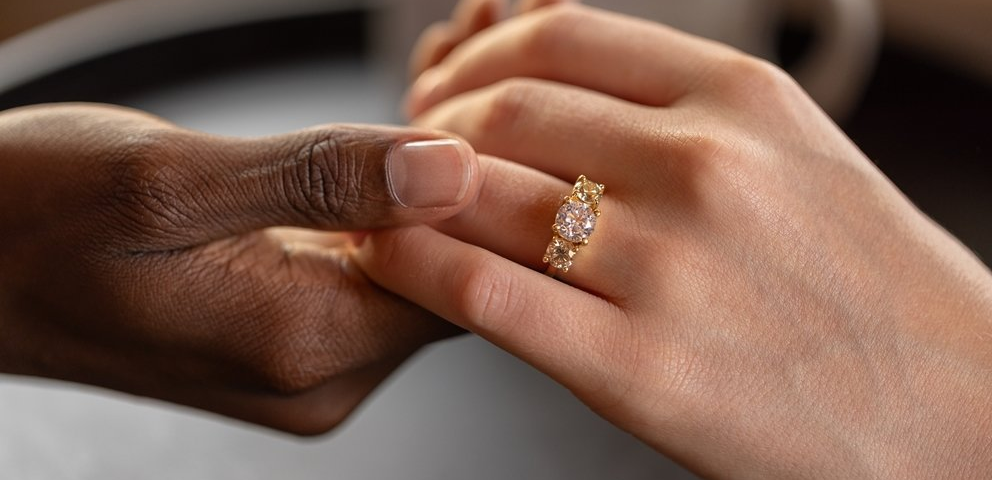
The Diamond Report includes insights on who is buying diamonds and why, based on a study of 18,500 women across the industry’s largest consumer market.
Natural diamonds are the most desired luxury jewellery product, average purchase prices have increased 25%, Gen Z is now the second largest generation buying diamonds, and non-bridal occasions account for three-quarters of overall US demand. These are some of the key findings of De Beers Group’s latest US Diamond Acquisition Study, featuring responses from 18,500 women aged 18 – 74 across the industry’s largest consumer market.
Completed in 2026, the biannual study also found that Gen Z spends almost double what Baby Boomers spend when buying natural diamonds—$4,080 per piece versus $2,250. While love-related purchase motivations remain the core driver of demand, personal motivations—such as celebrating a new job, getting a promotion, recognising an achievement or ‘just because’—are increasingly driving diamond jewelry purchases.
The study highlights that US consumers rank natural diamonds as their top preference for a luxury jewellery item, with 11% of women ranking natural diamond jewellery their most desired luxury gift. This places natural diamond desirability ahead of synthetic lab-grown diamonds (8%), other gemstones (5%) and plain gold jewellery (4%).
Average prices for natural diamond jewellery also increased significantly in 2025, rising to $4,063 per piece compared with $3,242 in 2023. This growth is being driven by consumers buying larger carat weights, with average total carat weight increasing to 1.86 carats, up from 1.65 carats in 2023.
When it comes to the industry’s youngest generation, the study found that Gen Z punches above its weight: the generation now accounts for just under a quarter (23%) of natural diamond demand value despite representing just 18% of the population. Gen Z consumers also buy or receive diamonds for more occasions than any other generation – at 1.83 occasions per year compared with an overall average of 1.7. While bridal occasions lead Gen Z demand at 45% of total purchases, gifting from relatives also plays an important role. Birthdays are particularly significant, representing 17% of all Gen Z diamond acquisitions compared with 13% across all generations. Gen Z also highly values self-expression and associates diamonds with being a symbol of identity more than any other generation, while also having the greatest reliance on social media for researching their purchases.
Diana Mitkov, lead researcher within Diamond Demand Insights & Analytics at De Beers Group, said: “The study findings highlight that today’s consumers aspire to own natural diamonds just as much as the generations that came before them, and ahead of any other jewellery product. And they are spending more per piece than ever before. But how and why consumers buy diamonds is evolving. Traditional life milestones such as getting engaged are no longer the only value driver for the industry; consumers are increasingly marking a wide range of occasions with natural diamonds and are looking for distinct pieces that feel personal to them.
“As unique miracles of nature, the attributes of natural diamonds play directly into these shifting consumer trends. The opportunity for the diamond industry is to ensure that natural diamonds continue to capture the value of this strong underlying desire in an increasingly competitive landscape by offering compelling designs across all sizes, colours and price points and for occasions that go well beyond traditional engagement or wedding jewellery.”
These findings feature in a new publication from De Beers, The Diamond Report, which also includes an editorial on the key forces shaping a positive future for natural diamonds by EVP Corporate Affairs & Strategy and Chief Economist, Eirik Wærness; an analysis of US jewellery retail trends; perspectives from leading US designers and retailers on how the diamond buying experience is evolving; and reflections on the role natural diamonds can play in supporting socioeconomic progress for the people and places where they are discovered.
The report also notes that natural diamond sales are increasing across US independent jewellers, with Point of Sales data from 950 retailers showing sales grew 4% and 9% year-on-year in Q4 2025 and Q1 2026, respectively. Coloured and low-coloured diamonds (those in the K – Z colour range) promoted by De Beers Group’s ‘Desert diamonds’ campaign outperformed, with sales growth of 15% and 19%, respectively.
The same data shows that while synthetic lab-grown diamond jewellery sales are increasing in volume, declining retail prices mean their value share of demand remains relatively low at 15% of independent jewellers’ diamond sales, compared with 85% for natural diamonds in 2025. In addition, there is a noticeable drop-off in sales once synthetic lab-grown diamonds reach 3 carats or larger in size, suggesting that consumers may feel synthetic lab-grown diamonds beyond this size could look too big. The report notes this could mean that as synthetic lab-grown diamond prices continue to decline in line with the multi-year trend already experienced, retailers may be unable to upsell to larger sizes, which could result in lower overall sales and impact long-term gross profits.
Eirik Wærness said: “The diamond industry is evolving at pace with both supply and demand-side dynamics shaping the industry’s future. On the supply side, declining global production of natural diamonds is expected to support an improved supply-demand balance over the coming years. On the demand-side, a resilient US economy and stabilisation of demand in China saw global natural diamond demand return to growth in 2025 while the industry’s marketing efforts are showing encouraging signs of momentum. With retail returns from synthetic lab-grown diamonds likely to come under pressure in the future, we expect retailers will increasingly differentiate them from natural diamonds in their sales strategies. As these fundamentals continue to stabilise, the industry has a significant opportunity to reinforce the value of natural diamonds and support long-term growth.”
– ends -Contact
De Beers Group Press Office
About De Beers Group
Established in 1888, De Beers Group is the world’s leading diamond company with expertise in the exploration, mining, marketing and retailing of diamonds. Together with its joint venture partners, De Beers Group employs more than 20,000 people across the diamond pipeline and is the world’s largest diamond producer by value, with diamond mining operations in Botswana, Canada, Namibia and South Africa. Innovation sits at the heart of De Beers Group’s strategy as it develops a portfolio of offers that span the diamond value chain, including its jewellery houses, De Beers London and Forevermark, and other pioneering solutions such as diamond sourcing and traceability initiatives Tracr and GemFair. De Beers Group also provides leading services and technology to the diamond industry in the form of education and laboratory services and a wide range of diamond sorting, detection and classification technology services. De Beers Group is committed to ‘Building Forever,’ a holistic and integrated approach to sustainability that underpins our efforts to create meaningful impact for the people and places where our diamonds are discovered. Building Forever focuses on three key areas where, through collaborations and partnerships around the globe, we have an enhanced ability to drive positive impact: Livelihoods, Climate and Nature. De Beers Group is a member of the Anglo American plc group. For further information, visit www.debeersgroup.com