Indian delegation attends KP Plenary, welcomes lifting of embargo on rough diamonds from CAR
November 17, 2024Panna diamonds remain unsold at the state-run Auction
November 18, 2024Dr M’zée Fula Ngenge

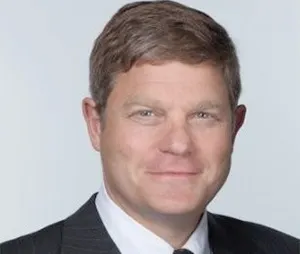
“African diamond-producing nations are not only looking at Dubai to serve as a functional outlet but also depend on the UAE to assist in securing their business interests, opportunities and objectives at present, without becoming an easy target for exploitation, ” advocates Dr M’zée Fula-NGENGE, Chairman of African Diamond Council (ADC) & African Diamond Producers Association (ADPA)
Dr M’zée Fula Ngenge, Chairman of the African Diamond Council (ADC) & African Diamond Producers Association (ADPA), is a Mining Engineer and highly respected Senior Strategy Advisor who celebrated 40 years in the global diamond industry this year. He acts as a professional liaison within the international diamond trade and is well-positioned to influence, both the public and private sectors.
In 1986, Dr M‘zee was instrumental in introducing the Ideal & Super-Ideal Cut diamonds to the global diamond supply chain. These highly sought-after Hearts & Arrow diamonds have rapidly increased in popularity since the 1990s. He also served as Chief Administrative Developer in 2000 and became Project Launch Team Coordinator in 2001 for Kimberley Process (KP), a diamond certification scheme to eradicate blood/conflict diamonds.
In 2001, Dr M’zée was a principal trustee and decisive proponent to establish Dubai as a major diamond and jewellery manufacturing centre, laying the foundation for the successful launch of Dubai Multi Commodities Centre (DMCC) in 2002.
In early 2017, M’zée drafted a bold and assertive revenue recovery proposal that urged the Republic of Angola to implement “Operation Transparency”; and in late 2018 an internationally lauded campaign that was effective in combating illegal immigration, unlawful exploration of diamonds as well as environmental crimes related to the plundering of natural resources, such as diamond smuggling.
At the beginning of 2019, Dr M’zée was assigned as Chairman and Managing Director of the African International Diamond Exchange (AIDEX), Africa’s most transparent rough diamond supplier for four diamond exchanges in Antwerp, the Diamond Exchange District in Ramat Gan, the world’s largest diamond bourse in Mumbai as well as the largest Free Zone in the United Arab Emirates. At the end of 2019, he was entrusted as Chairman of the Board of Trustees for the African Diamond Trust Fund (ADTF), a fully integrated, autonomous financial depository and vault operator for ethically mined rough diamonds originating in Africa.
Here, in an Exclusive Interview with Precious World, Dr M’zee, who was at the Dubai Diamond Conference 2024, mirrors the recent event in Dubai and shares his thoughts on the outcome of the KP Plenary 2024.
Some excerpts …
Many crucial discussions and decisions must have taken place during the Dubai Diamond Conference 2024. Please give us your opinion on the event and its possible ‘positive effect’ on the global diamond industry.
The Dubai Diamond Conference (DDC) was the flagship event that opened Dubai Diamond Week on November 11th. The one-day Conference, carried the theme of “Thriving Under Pressure: Navigating the New Global Paradigms,” which provided a fertile platform to address key challenges that the global diamond industry faces.
The specific industry topics on the DDC agenda that had to be discussed and dealt with focused on the global price downturn, the sluggish demand, the faceoff between natural and lab grown diamonds as well as the shifting acquisition tendencies of consumers. The global diamond industry, which is well known for its buoyancy and permanence, has and continues to witness a significant decline in one pivotal sector. To some degree, this startling retraction is generating a turbulent effect on numerous stakeholders, from diamond mining companies, retailers/jewelers as well as on the consumers.
As the diamond industry experienced an increase in natural diamond inventories during the month of June, prices dropped and sales decreased, putting additional pressure on hesitant dealers to trade during this undesirable interval of oversupply.
The Republic of Angola made a formidable entrance during Diamond Week at the Conference, leading off with an imposing speech entitled “Pioneering Angola’s path in a new global paradigm” from Midguel Vemba, the Director of Mining Operations and Joint Venture Management at Endiama, E.P. The Angolan delegation was led by Ana Maria Feijó Bartolomeu of Endiama, the Executive Administrator and Director for Geology and Mining at Endiama and the Angolan envoy also included leaders from Sociedade Mineira de Catoca, Sociedade Mineira do Luele and Sociedade Mineira de Somiluana.
Botswana and Zimbabwe were also well represented, by Conference Silver Sponsor, Okavango Diamond Company (ODC) that featured Mmetla Masire, ODC’s Managing Director as conference panelist. Zimbabwe’s Ministry of Mines and Mining Development saw their Minister, the Honorable Winston Chitando, deliver a keynote speech expressing optimism in his undertaking to satisfy the UAE’s increasing appetite for Zimbabwean minerals.
During the Conference, De Beers’ Group of Companies Chief Executive Officer, Al Cook spoke on the mining company’s plan to adopt authentia.io‘s original concept to incorporate country of origin data for all De Beers-sourced rough diamonds above 1.25 carats. Authentia’s innovative “certificate of origin” proposal will be applied to the Tracr platform, a digital blockchain technology for tracing natural diamonds that was inspired by Everledger, the first-ever blockchain verification and record-keeping service for diamond trading.
The Dubai Diamond Conference brought together industry leaders of governing bodies, professionals, retailers and stakeholders from governments to share strategies and insights that are truly driving change for the sector’s sustainable growth.
During the Kimberley Process Plenary Meeting, an 11-year-long ban on rough diamond exports originating in the Central African Republic (CAR) was removed. After the embargo was completely lifted, the reintegration process was implemented to reinstate CAR’s status Kimberley Process Certification Scheme (KPCS).
All in all, my overall assessment of the Conference was positive, hopeful and empowering, which offered an impressive blueprint that could certainly be emulated in the future.
Do you see Dubai growing into a major business capital as companies from across the world are seeking to establish contact offices in Dubai of late?
Establishing a major international business metropolis requires and does not come without some sort of effort and sacrifice.
Dubai has become a financial capital and hyper-connected hub for international business that is capable of fulfilling the dreams of aspiring global entrepreneurs. Over the last few decades, the United Arab Emirates has become a universal hub for both tourism and investment. The UAE government has taken a bold and enterprising approach to luring foreign investment from around the globe. This year, Dubai’s Jebel Ali Free Zone (JAFZA) is ranked 1st out of a list of 63 free zones in the entire world. JAFZA was also crowned Industrial Zone of the Year and named Top Sustainable Zone in both, global and Middle East categories. Jafza has reinforced its position as a global leader in trade and logistics by winning five major awards at the fDi Intelligence magazine Global Free Zones of the Year 2024 awards, which is part of the Financial Times Group.
Since there are no wealth or inheritance taxes, income or capital gains taxes, overall business taxes are minimal in Dubai and remain very attractive. Due to its low tax atmosphere, businesses possess the opportunity to prosper without ever having to be concerned about their profits being truncated by extortionate taxes.
In this last quarter of 2024, the City of Gold continues to offer an appealing environment for business owners. Nevertheless, the environment is not entirely tax-free. While Dubai provides substantial tax incentives, businesses must learn to navigate the Value Added Tax (VAT), Corporate Tax (CT) on substantial profits, and industry or sector-specific regulations. It is critical to grasp the scope of Dubai’s tax environment in all respects to remain compliant with all the country’s regulations, which is essential to maximizing the benefits and rewards of operating in this enterprising city.
Are diamond-producing countries in Africa looking at Dubai as a major supply outlet of rough diamonds? Besides the auctions taking place now, what other plans are being planned by Africa shortly?
African diamond-producing nations are not only looking at Dubai to serve as a functional outlet but are collectively depending on the United Arab Emirates (UAE) to assist in securing their business interests, opportunities and objectives at present without becoming an easy target for exploitation.
With one month remaining in the year, the UAE is set to exceed US$ 40 billion from its diamond trade, in line with the African Diamond Council’s (ADC) 2024 comprehensive year-end statistics report. This result would classify the UAE in third position behind the Republic of India and the United States of America in the world rankings. When compared to other major diamond centers, Dubai Multi Commodities Centre (DMCC) is a step ahead logistically and has cemented much of the global business.
The Republic of Angola is responsible for leading the transformation of Dubai into a major diamond center following a deal was struck between the government of Angola and India-based Rosy Blue, which sent 40% of Angola’s diamond production to the UAE. The agreement led to the 2005 construction launch of the 68-story Almas Tower, the tallest commercial tower in the Middle East. Today, 90% of Angola’s diamond output is being delivered to the UAE through DMCC.
The UAE is now looking to diversify away from oil production and broaden their initial investments in infrastructure and logistics by securing mining opportunities in Africa’s strategic mineral sector, beginning with Zambia’s copper.
Annually, there is an estimated US$ 35 billion worth of declared and undeclared African gold that makes its way to the UAE. The country has benefitted from their lucrative re-export mechanism that has been devised to legitimise the gold before being sold and exported to other countries.
This move was predicted after the success of a never-ending flow of gold that fed their refineries and processing plants.
Suppose African investors and entrepreneurs can avoid being affected by any future UAE visa bans of African nations. In that case, many will look to enhance Dubai’s corporate landscape by establishing big businesses in the UAE with a dream of flying their national flags high above tall commercial towers all along Sheikh Zayed Road.
With attempts to retake control of the continent, will Africa be interested in investments from other countries in the diamond/precious metals mining sectors?
Yes, of course! The presence of Russia at the top of the producing nations has generated a great deal of interest from other GCC countries as well as from the United States, which is the top consuming nation of African diamonds. With heavy U.S. investment that has been secured for the Republic of Angola in the Lobito Corridor, solar power and renewable energy, the focus shifted to mineral resources, such as diamond exploration and mining. As we move closer to the opening of the 17th US-Africa Business Summit that is scheduled to take place in Luanda next year from June 23rd to June 27th, the topic of diamonds will become much more relevant, especially from the United States.